


Led Teeth Whitening Does It Work?

A brighter smile is something many people want, and with so many options out there, it can be hard to know what really works. You've probably seen ads for LED teeth whitening kits, promising quick results. But does LED teeth whitening work? It's a common question, and understanding how the technology functions behind the scenes can help clear things up.
Let’s explore what the LED light does in teeth whitening and whether these kits actually deliver on their promises.
Key Takeaways
- LED teeth whitening uses blue light to speed up the chemical reaction of peroxide-based whitening gels.
- The whitening gel is the main agent; the LED light helps accelerate results.
- Professional treatments use stronger gels and higher-intensity LED lights than at-home kits.
- Research on at-home LED kits is mixed, with some studies showing minimal added benefit from the light.
- Consistency and gel strength matter more than the LED light alone.
What Happens to Teeth When They Become Stained
Even with regular brushing and flossing, teeth can gradually lose their brightness. Daily exposure to foods and drinks like coffee, tea, red wine, and berries contributes to discoloration.
Teeth are porous, allowing pigments to settle into the enamel and sometimes reach the dentin beneath, which is naturally yellow. This is why surface cleaning alone isn’t always enough.
- Food & Drinks: Coffee, tea, red wine, berries, tomato sauces
- Tobacco: Smoking or chewing tobacco causes deep stains
- Aging: Enamel thins, revealing yellow dentin
- Medications: Some drugs can discolor teeth
How LED Whitening Works Behind the Scenes
The LED light doesn’t whiten teeth on its own. Instead, it helps activate the whitening gel, usually made with hydrogen peroxide.
- Gel Application: Whitening gel is applied to the teeth.
- LED Light Exposure: Blue LED light shines on the teeth.
- Accelerated Reaction: The light speeds up stain breakdown.
LED technology is safer than older UV methods and doesn’t generate significant heat, making treatments more comfortable.
What to Expect During a Treatment Session
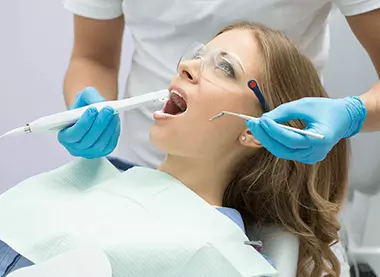
LED teeth whitening is a simple and comfortable process. It typically starts with a cleaning and shade assessment.
Your gums are protected, whitening gel is applied, and the LED light is positioned in front of your teeth. Sessions usually last between 30–60 minutes, sometimes in multiple cycles.
After treatment, teeth are rinsed and re-evaluated. Mild sensitivity may occur but usually fades quickly.
How LED Whitening Compares to Other Whitening Options
- Professional LED Whitening: Strong gels, powerful lights, fast and dramatic results
- At-Home LED Kits: Lower intensity, moderate results, more affordable
- Traditional Trays: Gel-only whitening, effective with consistency
- Whitening Toothpaste/Strips: Surface stain removal only
The whitening gel is always the main factor. LED lights mainly help speed up the process.
Why Many Patients Prefer LED Whitening
- Fast results, often in one session
- Reduced sensitivity compared to some methods
- Professional-grade effectiveness
- Convenient appointment times
The combination of comfort, speed, and visible improvement makes LED whitening a popular choice.
Wrapping Up LED Teeth Whitening
LED teeth whitening can be effective, especially when done professionally. While the light doesn’t whiten teeth alone, it helps the gel work faster. Stronger gels and professional equipment usually produce better results.
At-home kits can still improve your smile, but they often require more time and consistency. Ultimately, the whitening agent and proper use matter most.
Frequently Asked Questions
How do teeth get stained?
Teeth stain from foods, drinks, tobacco, aging, and enamel wear that exposes yellow dentin underneath.
What is the main ingredient in whitening gels?
Hydrogen peroxide, which breaks down stains through oxidation.
How does the LED light help?
The LED light speeds up the stain-removal reaction of the whitening gel.
Are professional LED treatments different from at-home kits?
Yes, dental offices use stronger lights and higher-concentration gels.
Can LED whitening cause sensitivity?
Some sensitivity may occur due to the gel, not the light, and is usually temporary.
What results can I expect?
Professional treatments often whiten teeth several shades in one visit, while at-home kits provide more gradual results.
Blog Post Author

Contributed by DentalROI
DentalROI provides relevant dental content to help providers educate patients. The statements, services, and products referenced in this article have not been evaluated by the Food and Drug Administration, and they are not intended as a substitute for professional medical advice, diagnosis, or treatment. Always seek the advice of your dental provider with any questions or issues you may have. Specific recommendations may vary in different circumstances, so individual consultation is important.




 Facebook
 Twitter
 Google
 YouTube